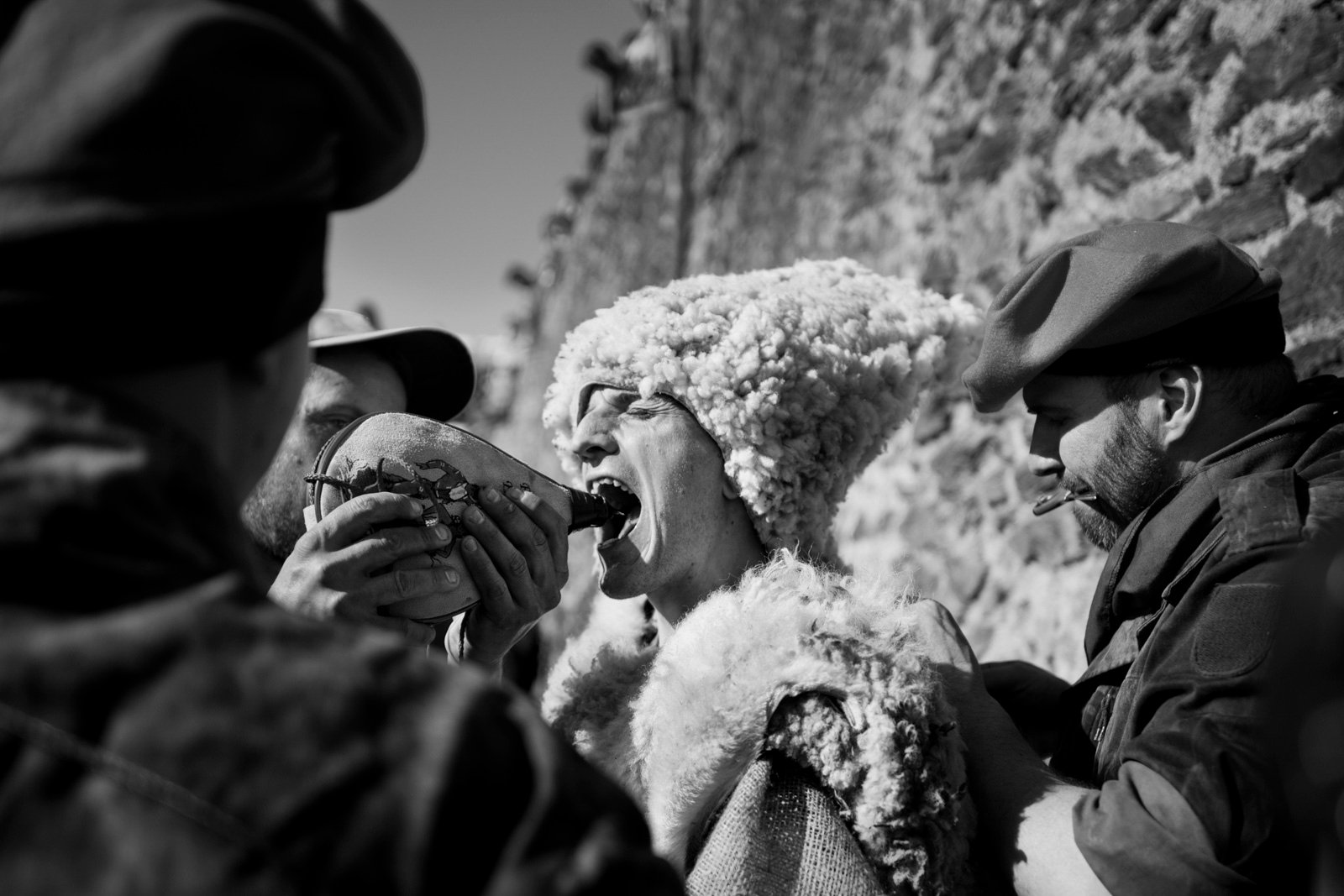
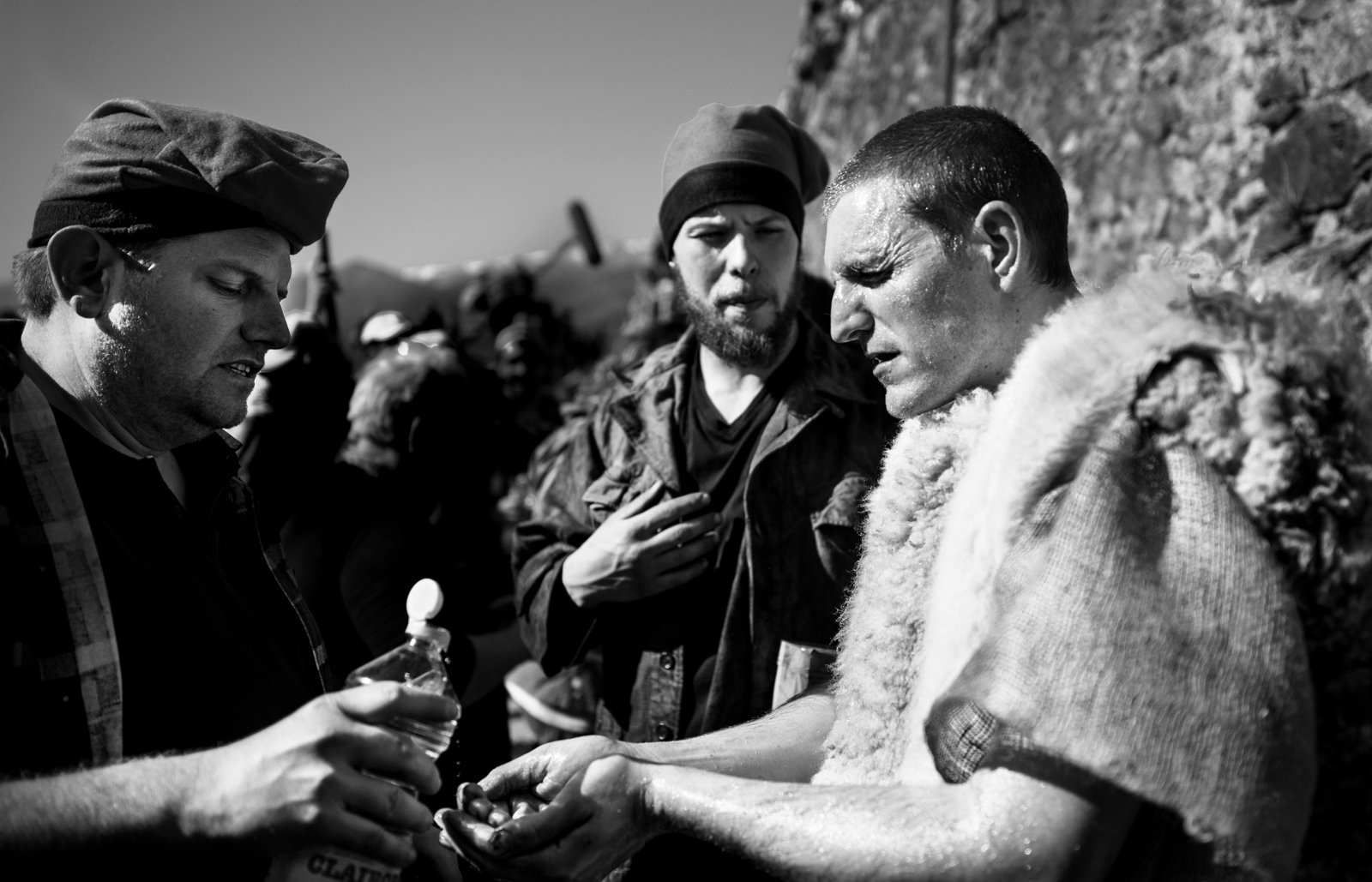
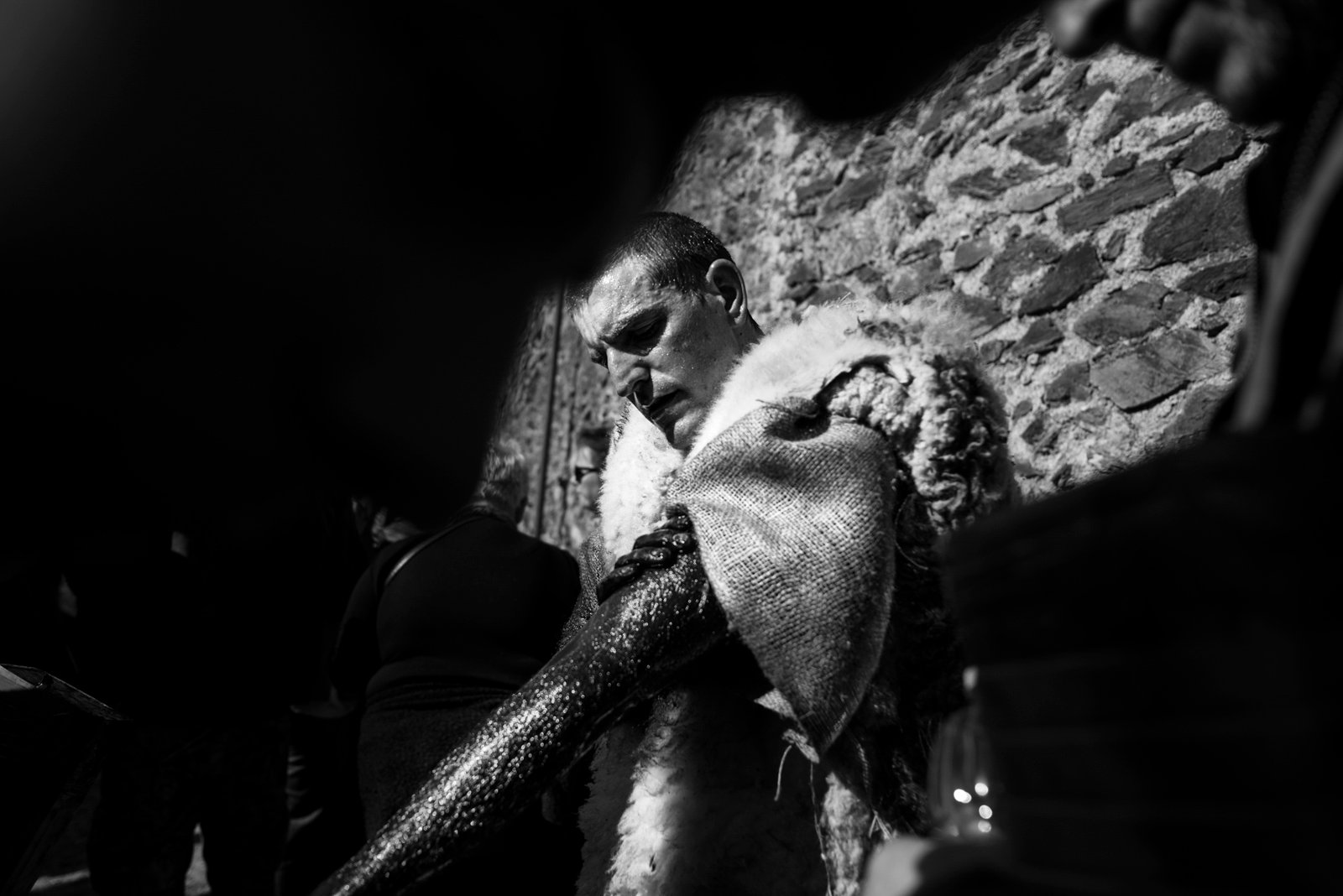
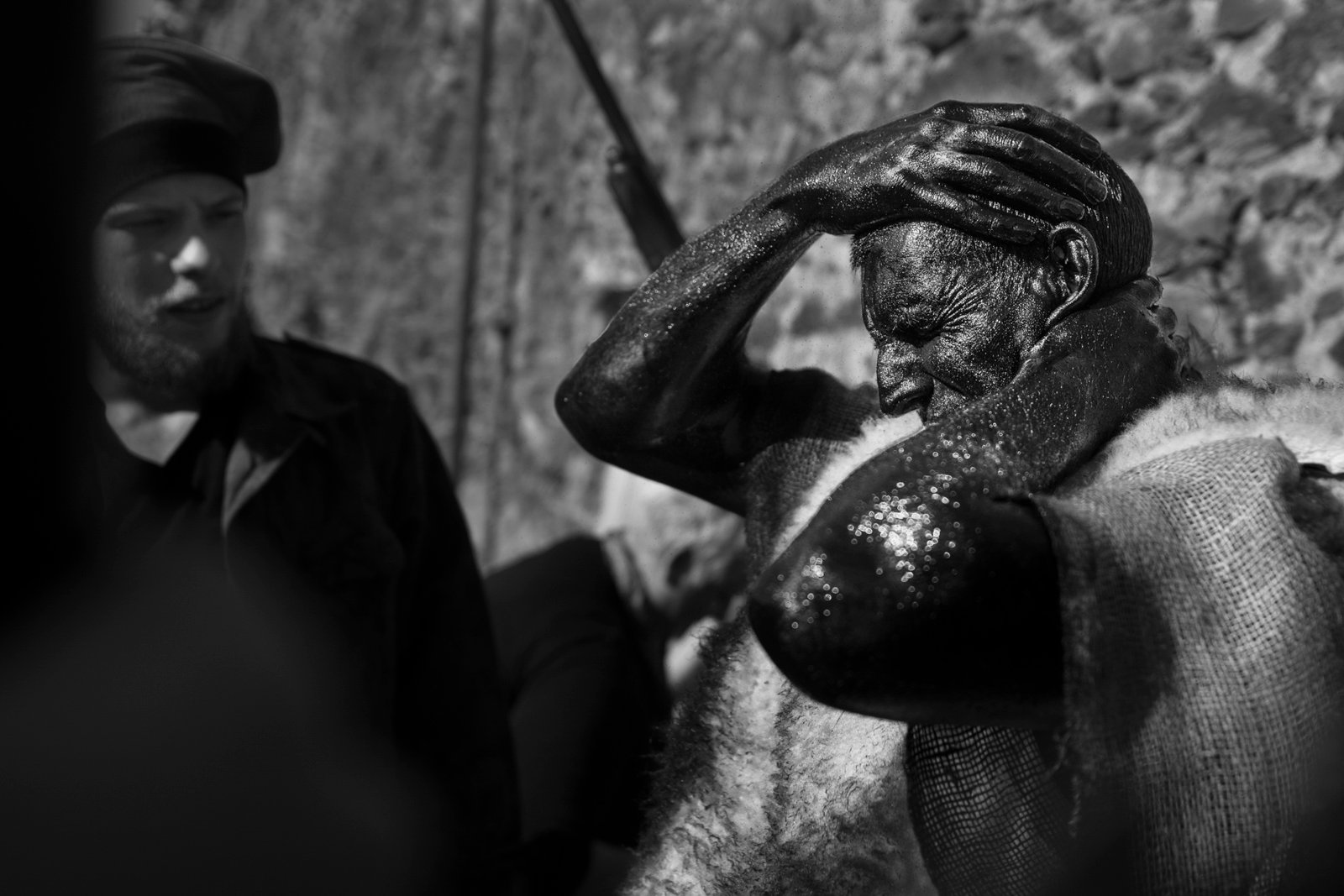
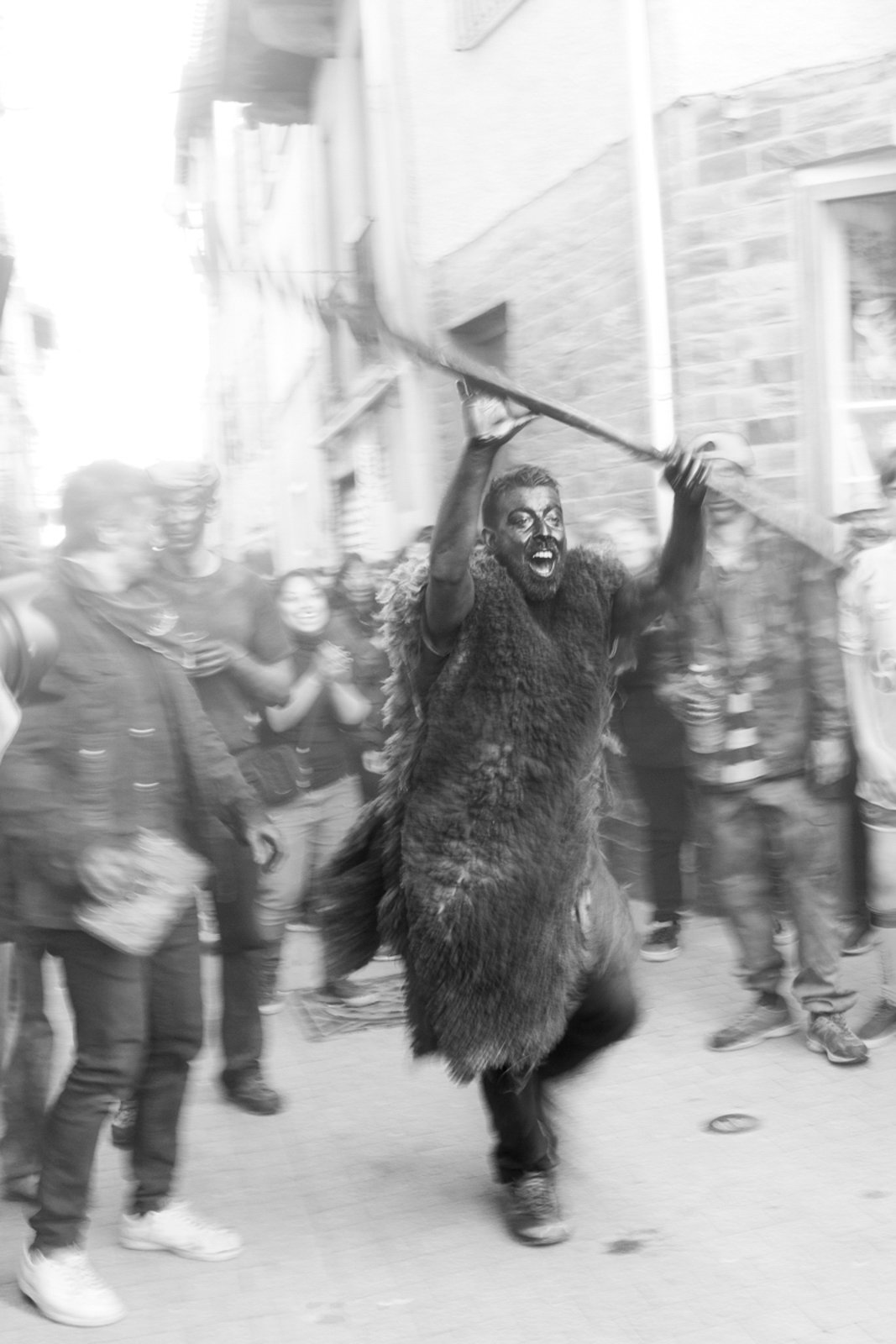
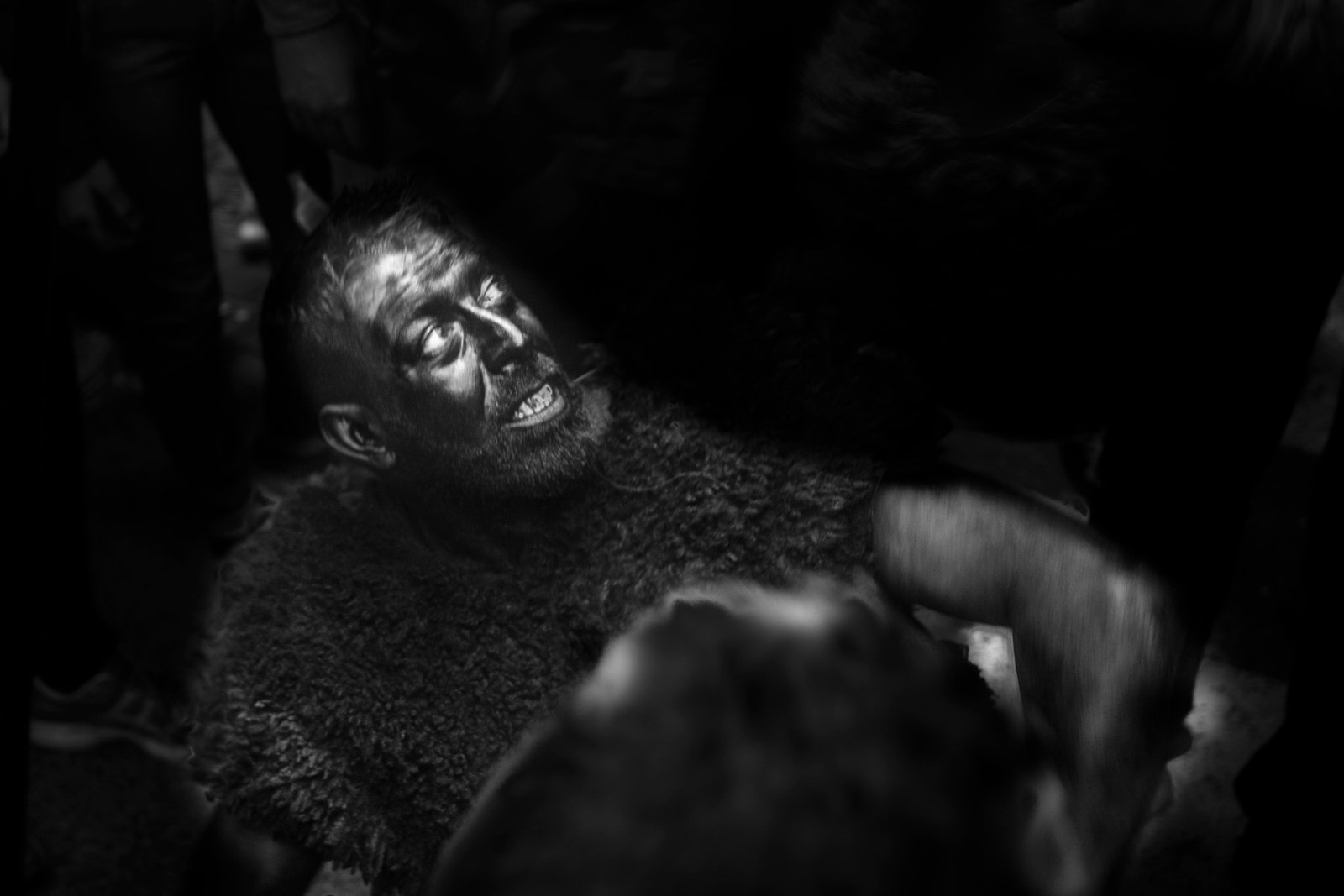
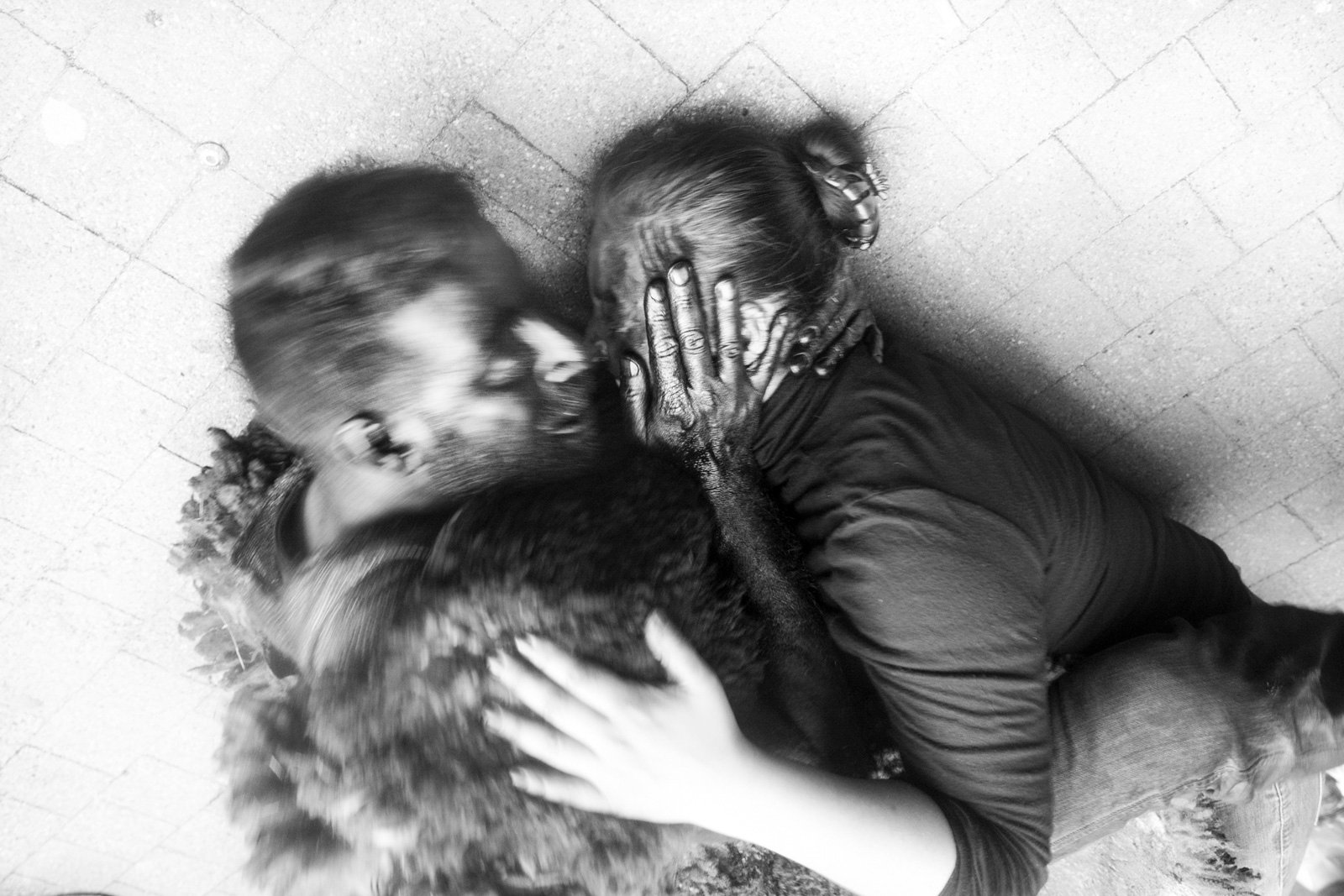
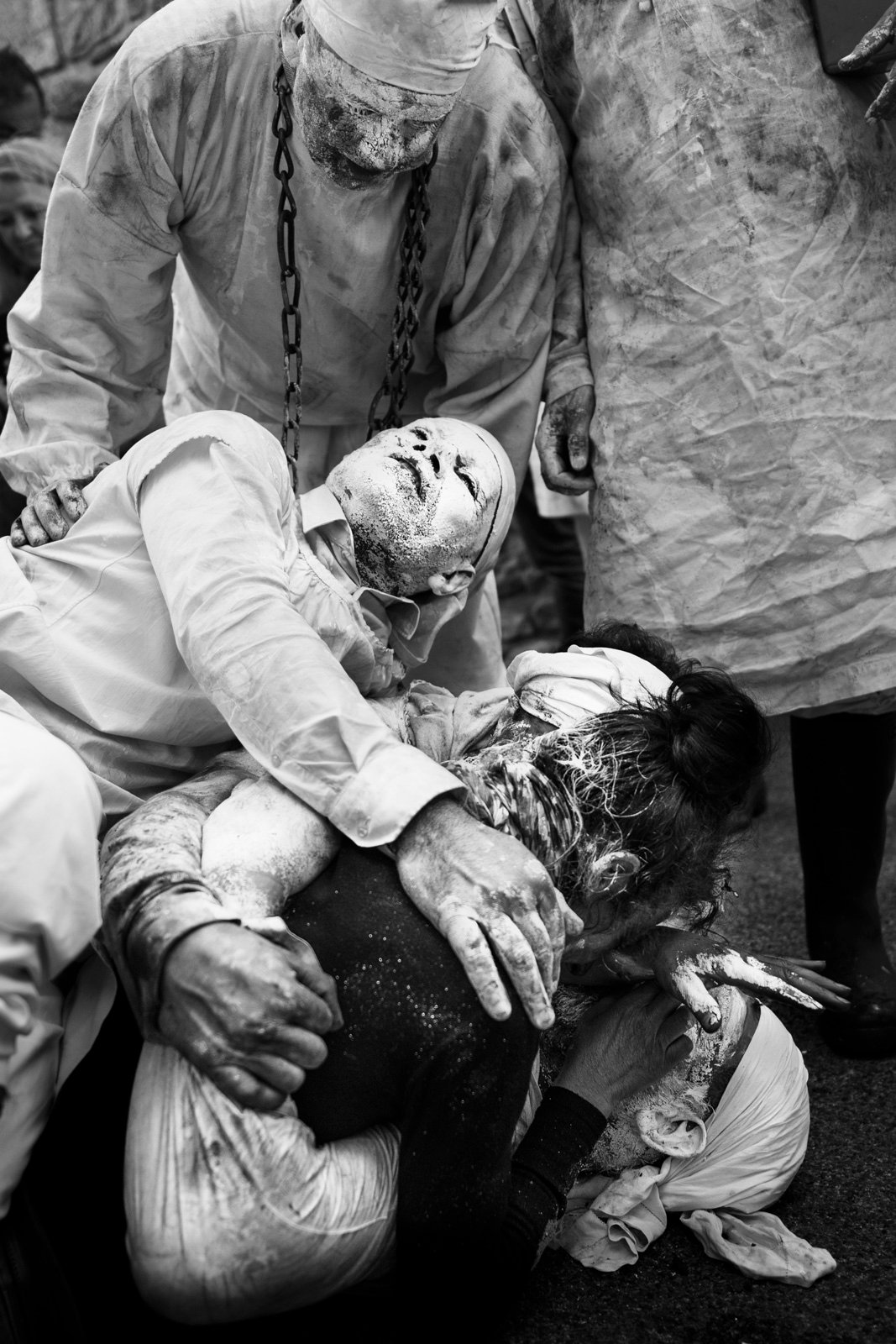
Every spring, in Prats de Molló, a small village in the French Pyrenees, an extraordinary ritual comes to life. Three men, dressed in sheepskin, smear their faces and arms with a mixture of oil and soot. They are the “bears.” Accompanied by their “hunters,” the bears descend into the village, leaving their marks and pouncing playfully on anyone in their path — with a particular attention to the girls.
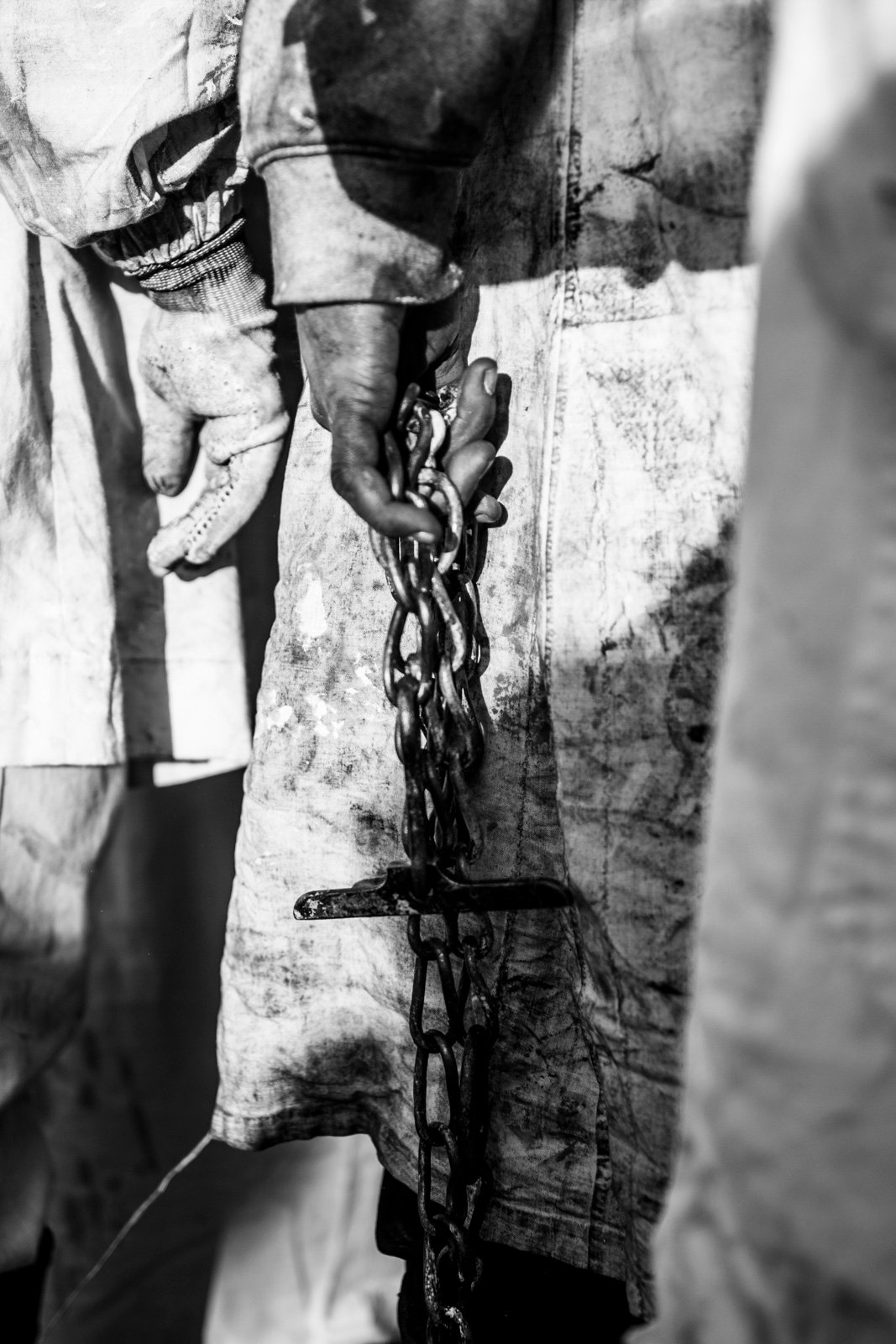
As the afternoon unfolds, the barbers, dressed in white, engage the bears in a fierce struggle, eventually chaining them in a symbolic act of control and order.
Every character in the Feast embodies elements of Pyrenean folklore and legend. The ritual reflects ancestral myths: the eternal struggle between man and bear, the taming of the wild, the awakening of desire in spring, and the tension between freedom and social order.
The Bear Feast is more than a spectacle; it is a living memory, a celebration of ancestral beliefs, and a performance in which myth, human instinct, and community intertwine. Each year, it reminds the villagers and visitors alike of the wild, the sacred, and the playful forces that continue to shape their culture.